Pages

Welcome

You have found us. We are a secret group of crack birders who have turned our backs on the machismo, corruption, and backstabbing greed that constitute today's birding scene, and have united together to follow the True Path of non-competitive, collaborative and generally lovely birding-as-meditation-and-spiritual-growth. Consequently, we never see anything. Birds that land right in front of our noses, and which we can identify with our observer book, are written about here. Oh, and they have to be seen in - or from - the parish of Winterton-on-Sea, Norfolk, or on the walk round past East Somerton Church ruins and up the concrete track to Winterton Holmes (because it's a nice walk which we all do).

Sunday, 2 May 2021

April 2021 Roundup

Although the spring rain was notably absent, April lived up to the rest of T.S. Eliot's famous description, and migrants had a hard time of it in the almost continuous cruel and cold NE wind. The early flurry of Swallows in particular must have really struggled.

Nevertheless there were some decent birds, although it most definitely was NOT the best April ever here (which for Sean was April 2008 in case you're interested 😊 - some will remember why...).  The Iceland Gull remained throughout the month, our Peregrine continued to use the church tower throughout as well, and there were pretty good numbers of Ring Ouzels to be seen, so we made do.

Mick had three Wheatears in the north dunes on the 1st, and on the Second Maynard had a Green Woodpecker, the second of the year, at the back of the Low Road paddocks. On the 3rd Pat found two more Canada Geese from the concrete track, allowing at least one of us to get a welcome grip-back for our year lists... Pat also had a Sand Martin from his garden on the same day. 

Sean had a lone Swallow on the 4th, and Tim a Willow Warbler in its customary territory near to the concrete blocks.  It snowed on the 5th, yet despite this Sean had the first Common Tern, along with several Sandwich Terns, an appropriate Snow Bunting and near frostbite...  The tide and the wind were so powerful on the 5th that the rope fencing and posts cordoning off the hoped-for Little Tern nesting area, only erected a few days earlier, was ripped out by the sea. Mick bravely went down that evening and tried to secure it, and was nearly pulled out by the tide!

On the 7th a distant Grebe sp going north was considered to possibly be a Red-necked, but it was too far out for us to clinch.  On the 8th Mick had a few more Sandwich Terns sitting on the Cockle light station (about 3/4 of a mile out to sea). They really must have been wondering why they had bothered... Pat had a Siskin on his feeders, but a dead Harbour Porpoise towards the north end miserably failed to attract any Ivory Gulls...

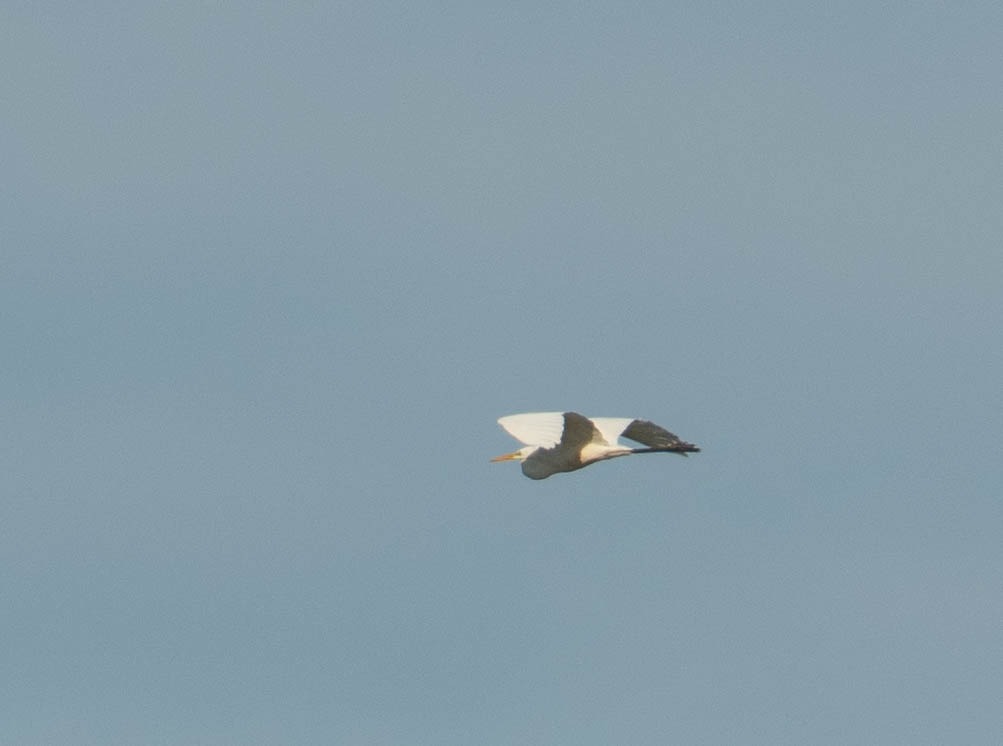
...so we had to make do with this little fellow, which Tim photographed up at Bramble Gap on the 9th when he also saw 3 Great White Egrets and a Swallow. 

On the same day Pat saw the first House Martin of the year from his garden, and the next day took these impressive photos of an impressive beast still in the area, the White-tailed Eagle.


On the 11th Barry had an Avocet from Bramble Gap, in what over the years has become known as the Avocet Pool, and Ted had a Purple Sandpiper on groyne 52.  Pat recorded two more Siskins in his garden.

Red Kites were seen by most of us on various dates through the month, and Fulmars became increasingly regular on the sea and even along the beach. There were a few more White Wagtails seen, including one by Barry from Low Road on the 14th and this one by Sean in the same place a few days later.

On the 15th Mick saw a Ruff on the plantation pool - a good bird around here - and in a very brief seawatch Sean managed a pair of Tufted Ducks before coming to his senses and giving up due to the absolutely freezing north wind. Later that day day Mick also had the first Ring Ouzel of the year in the south dunes, and Colin had 3 Wheatears in the north dunes. 

On the 17th Mick saw the first Yellow Wagtail of the year moving north, and Ted located the first House Martin away from Pat's garden area, above the Low Road paddocks. Bar-tailed Godwits were still moving at this stage in the month: Pat had 5 on the 17th, Mick 7 north off the car-park on the 18th and one on the plantation pool on the the 22nd, Tim had one on the 23rd from Bramble Gap, Sean had 5 going south off the south dunes on the 24th and Maynard had 2 in the same place on the 30th. 

On the 18th Pat heard a Grasshopper Warbler reeling at full throttle in the north dunes quite early. Most of us went up for it but by the time we arrived it had clearly decided conditions were far too cold for pouring its heart out, and we only heard it giving very short bursts, from very close by, and stubbornly refusing to show itself. 

A feature of the last third of the month was the passage of Whimbrels which began on the 20th with one seen by Sean and Mick as it flew south calling along the shoreline of the south dunes, and numbers picked up steadily until by the month's end flocks in their tens and twenties were being seen. 

The first Whitethroats were seen by Mick on the 20th,  and a few Song Thrushes and high Sparrowhawks seemed to be migrating on the same day.  

Pat's garden continued to be the only reliable site to see House Martins. Here is one of the two whizzing around there on the same date.

In the afternoon of the 20th Sean saw the first Cuckoo of the year, a male near the double pools in the north dunes, and shortly afterwards found a Wryneck near the concrete blocks.  The Wryneck proved impossible to get a photo of but he did capture this astonishing image of the Cuckoo 😁.


On the 21st Mick came across a roosting Short-eared Owl in the north dunes which allowed him to get this fantastic photo - almost as good as Sean's Cuckoo shot 😂.


From the 22nd Ring Ouzels started to be seen daily in both the north and south dunes, up to about six at a time, and Red Kites continued to put in regular appearances. 


On the 23rd, with most of us still waiting to see our first, Tim saw his second Green Woodpecker of the year at Bramble Gap. Pat had a Yellow Wagtail over and found another, or the same male Cuckoo in the north dunes. With careful fieldwork he was able to equal (or perhaps even exceed) Sean's earlier success and capture this stunning image 😂. 


On the 24th April Sean saw the unusual sight of about 80 Carrion Crows flying south quite high in several loose flocks just out to sea, obviously migrating.  Apparently others have noticed this sort of movement in spring on the north coast too. 

Black Redstarts popped up at the end of the month, with Barry finding one in the village on the 25th and Stephen, one of our regular visitors, finding another in the valley on the 26th, which was also present the next day. 

On the 27th Sean and Barry saw another Cuckoo in the valley, plus a House Martin and the Black Redstart, and the Iceland Gull decided to have a little investigation of the newly planted McCain Oven Chips field to the south of the village.

The 28th finally saw reasonable numbers of Swallows arriving and this continued for the last few days of the month; although there was barely a letup in the wind, it had at least got slightly less freezing.

On the 29th we had the first significant arrival of Little Terns, with around 50 moving north before 9am. Barry had the first Sedge Warbler along the Holmes Road the next day (30th) Tim added Reed Warbler in the same place. Interestingly both of our commoner Acrocephalus warblers have been present at inland sites for well over a week now. Pete suggested that the reason they arrive here later is because it is sub-optimal habitat and so only gets used when places like Hickling etc are filled up with breeding pairs. 

Also on the 30th Tim had another Yellow Wagtail, but they have been very thin on the ground so far this year.  

Another birds that has been really notable by its absence this year has been Brent Goose - numbers have been way, way down in every month compared to previous years. We wonder if other observers along the east coast have noticed this seeming collapse?

At the end of the month on the 30th Sean had the first patch Lesser Whitethroat of the year, singing from a hedge opposite Duffles Pond.

Honourable mention must also go to our resident Hybrid Hoodie who can always be relied upon to cheer up the day. 

So that was April. Our collective total for the year has gone up to 160 species.  Let's hope this bloody wind changes in May!

In other wildlife news we have noticed a lot more Roe Deer on the patch this month, along with the more usual Red Deer, Muntjac and Chinese Water Deer.  Hares have been much in evidence too, even in the north dunes, and adders have been out in the sunshine, braving the continuing cold wind. 

We'll leave you with a few more photos of the month, and after that a couple of blasts from Aprils past.  Good patch birding everyone!


30th April 2019


March entries from Peter's original bird notes of yesteryear, written for and published by the NOA, charting the early stages of the third technological revolution: from the Olivetti Typewriter, via the Amstrad Word Processor to the IBM PC! 

1989

1991

1994


And finally...

April 20th, 2008


Thursday, 1 April 2021

March 2021 Roundup

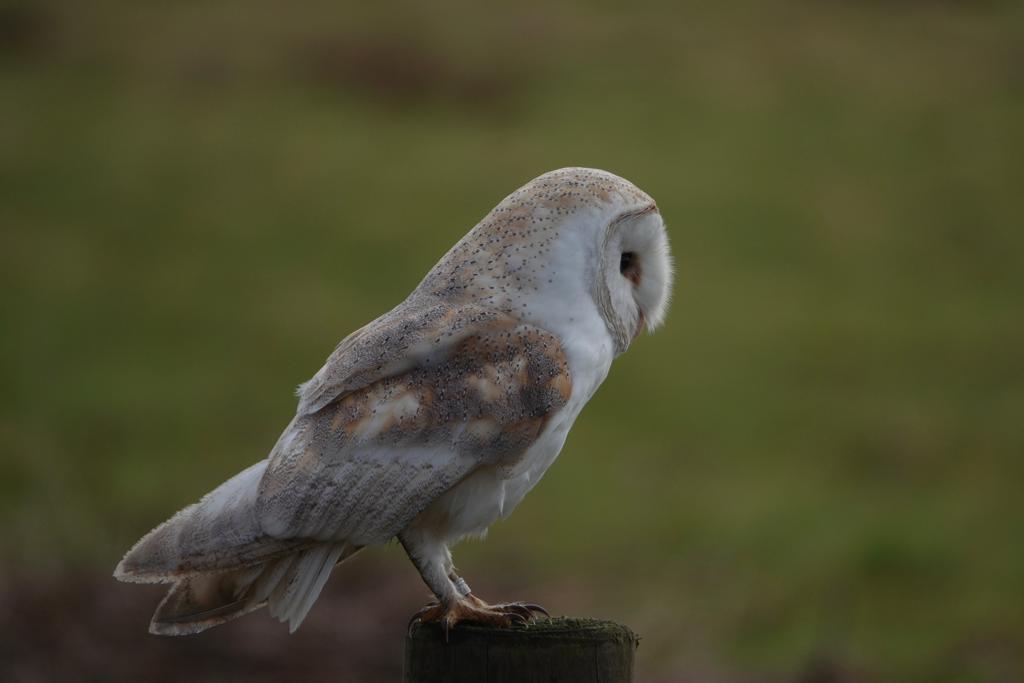
 The flooded field near Commissioner's Drain continued its recent run of good waders with a Knot seen by Tim on March 1st. On the 3rd it also produced 38 Dunlin and a Redshank for Mick. On the 4th, Pat finally caught up with a Russian White-fronted Goose amongst the Pinks, along with the three Barnacle Geese and several Brent Geese.  Mick had a flyover Lapland Bunting on the same day, whilst Tim located the two Tundra Bean Geese again. Meanwhile, back near Commissioner's Drain a Barn Owl performed very nicely for Pat's camera.


Just outside of the patch from the Horsey Road but of note anyway was this interesting Cackling Goose, presumably minima if not a hybrid. It was initially found by Barry, and also photographed by Pat.

The early part of March saw the Peregrine become a virtual resident on the the church tower, and Pat was even able to video it on several occasions from his garden! 

On the 6th March the number of Tundra Bean Geese went up to three (Tim) and a Great White Egret was noted again in the north of the parish. Short-eared Owls were seen occasionally through the month, including one seen unusually near to the village by Pat on the 7th.

On the 7th Barry saw a Rock Pipit on one of the groynes to the north of the village, and this proved to be the first of quite a few, including this finely plumaged, clear Scandinavian/littoralis bird with its rosy flushed breast, strong supercilium and almost Water Pipit greys on its head and back. It is apparently the case that almost all our Rock Pipits in Norfolk are likely to be littoralis rather than petrosus (see the 2019 Norfolk Bird and Mammal Report), a fact I was blissfully unaware of, since they are only separable in the spring, until I Tweeted this image and received some really interesting followups about it including an article from the 1995 NBMR on "The Origins of Rock Pipits in Norfolk".  

Here's another shot of another Rock Pipit which stayed below the remains of the cafe for a couple of days. 

On the 11th Mick had the first Sand Martin of the year whist seawatching, and he also saw the second on the 29th.  

On the 14th Tim saw another Red Kite over the village.  There were a number of Eider seen flying past throughout the month including two males south on this date.  On the 15th Colin saw another two Red Kites in the North Dunes, which lingered and loafed about in the wind for quite a while. 

The Peregrine was still spending a lot of time on the church tower around this time. 

On the 17th a morning seawatch produced a Pintail, the usual Iceland Gull, identifiable by its right wing,  a Fulmar and a fairly big movement of Gannets and Red-throated Divers  for Sean - these two latter species continued to be noted in large numbers quite frequently until the month's end. 

On the 19th Maynard heard a Water Rail, and saw a Bullfinch and several Treecreepers.

On the 20th much excitement for patch listers when Mick called in 10 Canada Geese (patch gold) which he had seen from Commissioner's Drain. Several quick-off-the-mark Collective members managed to connect, but by the time some of us arrived they were long gone.  I can hardly bear to post Mick's picture... 

Patrick noted the first flock of Siskin of the year, also on the 20th, and the Iceland Gull was still patrolling up and down the beach.

On the 21st Mick had a good seawatch, recording Great Crested Grebe, Shag, and two Great Northern Divers.  

On the 22nd Peter saw two Brambling in the recently cut maize patch on Low Road, and in the afternoon Sean found a distant White-tailed Eagle north of the Holmes Road, which caused pandemonium in the geese flock and then lumbered low through the famland, heading inland.  Given the number of eagles to the south of us and the north, it was not an entirely unexpected event. 

Also on that day Sean took a picture of a lovely male Hen Harrier passing through the Pink-footed Geese flock without noticing that he had also unknowingly photographed a couple of the Tundra Bean Geese!  Social media to the rescue again!

Luckily for the Collective year-listers, the eagle was also present the next day and for the following few days, when it was also joined by another!

On the night of 22nd-23rd Sean night-recorded the calls of both Water Rail and Coot (a mega rarity during the day but surprisingly common in nocmig recordings), as well as some nice Common Scoter calls. 

On the 23rd Pete found a Firecrest in his garden and generously put the news out, allowing safe and socially distanced viewing of the bird from outside of his property.  No lockdown rules were broken but most of us managed to add it to our year lists. In fact, Sean added both Firecrest and Goldcrest to his on the same day! 

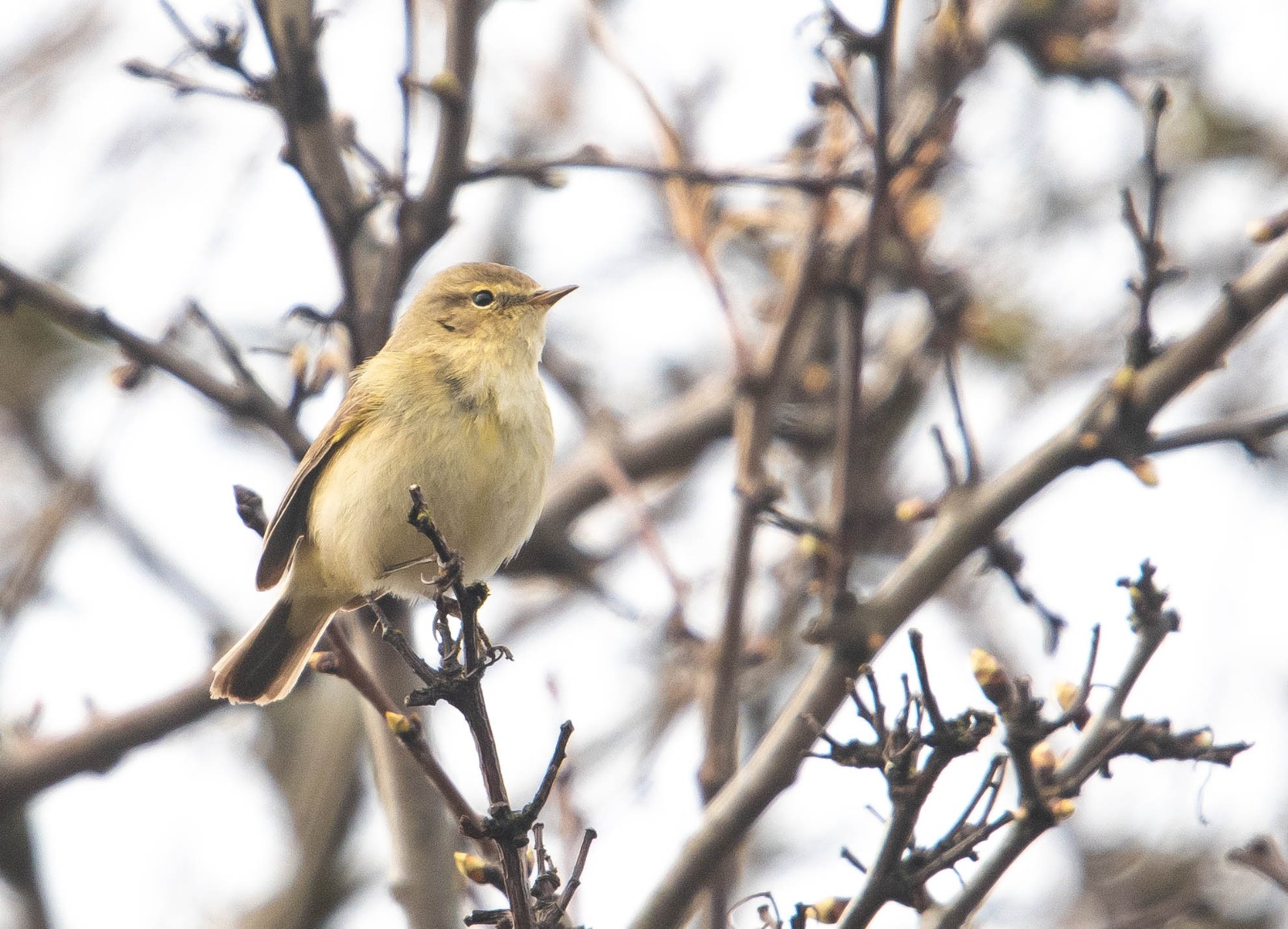
Chiffchaffs had been present on the patch since about the second week of March, but none had been singing until one in the valley, also on the morning of the 23rd. This uncorked the bottle: there must have been a big arrival overnight as on the 24th there were many songsters on the patch. 

It was also a pleasure that morning to hear this Song Thrush pouring out his heart in the valley. 

On the 25th Sean had three White Wagtails on the ploughed field to the south of the village, and over the next few days several more were seen. 

Also over the following few days there were more Red Kites, Bramblings and White-tailed Eagle sightings continued.

On the 26th Barry found a Black Redstart in the valley and the next morning day Sean saw two there, then Tim topped that with three in the afternoon.  This was nothing though as on the following Barry managed to see five together in the Paddocks!

Photo by Pat
The first Wheatear was found by Colin in the North Dunes on the afternoon of the 27th, and the first Swallow by Barry the next day on the 28th. 

There were more Black Redstarts, Wheatears and Swallows as the month ended, and the first Willow Warbler of the year was singing in the valley on the 30th.  Also on the 30th Tim saw a Grey Wagtail and a Green Woodpecker in the North Dunes.  Green Woodpecker is an increasingly scarce bird here these days.

At the end of the month Blackcaps had become much more frequently seen in the valley and elsewhere, as the arrivers added to the small wintering population, and the Peregrine remained a regular on the church tower. Dare we hope it might find a mate and breed?  As lockdown ended and the first visiting birders began to arrive, we noted one of our regulars caught up with a Short-eared Owl in the North Dunes, and Colin connected with a couple of Curlews over his garden. 

So that was March.  Spring is beginning to spring and at the end of March we have collectively seen 140 species on the patch, which is really not bad at all. We are all looking forward to the next few months and for now we'll leave you with a photo of a bird which is basically synonymous with March in Winterton. Happy patch-birding everyone!


Sunday, 28 February 2021

February 2021 Roundup

A slight change to this month's roundup as we have decided to include unphotographed birds seen by only one of us. Where this is the case the observer will be indicated so that if they have made a mistake they can be publicly ridiculed and their reputation trashed by all 😁.  Also it's easier to write it as a chronological account, and hopefully this will give a bit more of a feel for the birding month too.  Peter used to do this sort of monthly report for the NOA and so we though it might be nice to include some of these old reports at the end as well.

February 2021 began with a nice Merlin chasing a sanderling out at sea, and one Iceland Gull remained on the north beach, and was seen intermittently throughout the month right up to the end. Merlin were also seen pretty regularly through the month, and one seemed to be doing something of a regular circuit as it was seen over Low Road at pretty much the same time on several different days.


Photo by Tim taken on 11th Feb

Also on the 1st, a Little Egret was seen by Tim (and intermittently by others through the rest of the month), and a Song Thrush was singing at Duffles Pond. 

The Pink-footed Goose flock at the north end varied in size through the month but was generally around 2000 or 3000 birds. The flock contained a single Barnacle Goose throughout the month. 

Maynard had the first Curlew of the year on 2nd of February, as well as the first Shelduck. 

There were not many Snow Buntings on the beach, though Pat saw 4 on 5th February and Maynard had 12 the next day. Purple Sandpiper was seen throughout the month, and Tim took this great photo on the 5th. 

Ringed Plovers started to reappear on the beach early in February and courtship displays were observed later in the month. As the weather started to turn distinctly colder on the 6th, numbers of Woodcock were seen in the north dunes, arriving on the easterly wind ahead of the big freeze which was about to start. Sean found a Caspian Gull on the north beach in very strong winds on the 6th too. 


Yellowhammers, which always seem to disappear in January, started to reappear in the dunes and surrounding farmland during the month. 

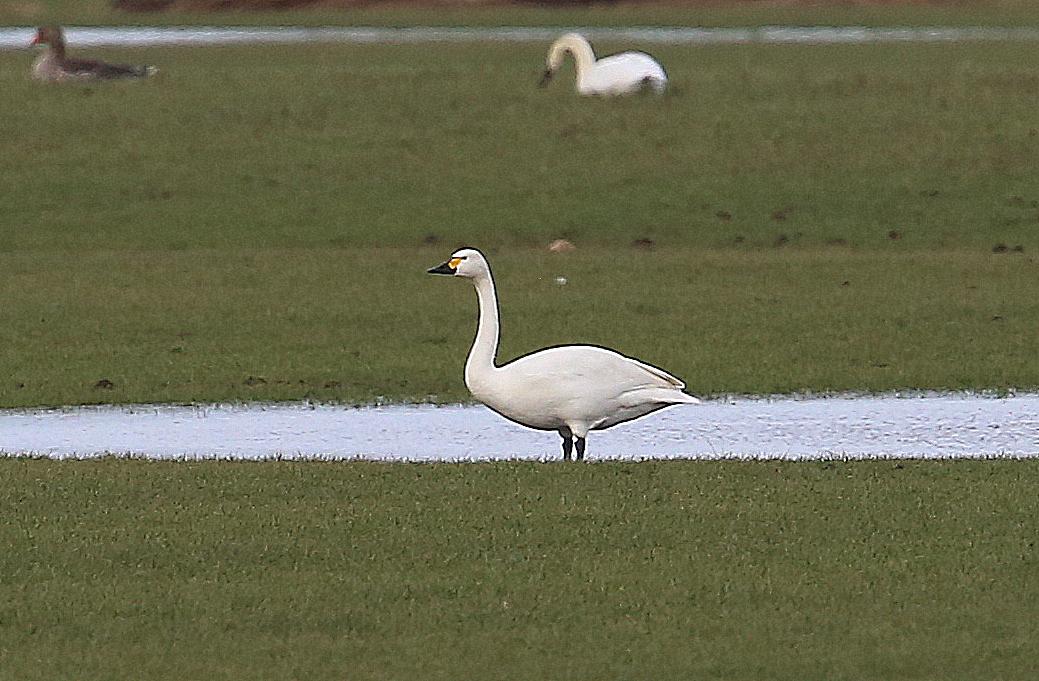
On the 6th, Mick saw three Berwick's Swans fly over the concrete track and a Peregrine at Commissioner's Dyke. One or more Peregrines was seen throughout the month, including on the church towards the end. It would be brilliant if they nested!

Gadwall and Teal were seen in small numbers on sea watches and in the farmland through the month. 

As the weather turned really cold and snowy Lapwings, Snipe, Woodcock and Dunlin started turning up in odd places along Low Road and elsewhere, and Sean had 2 Redshank at Commissioner's Dyke on the 7th. 

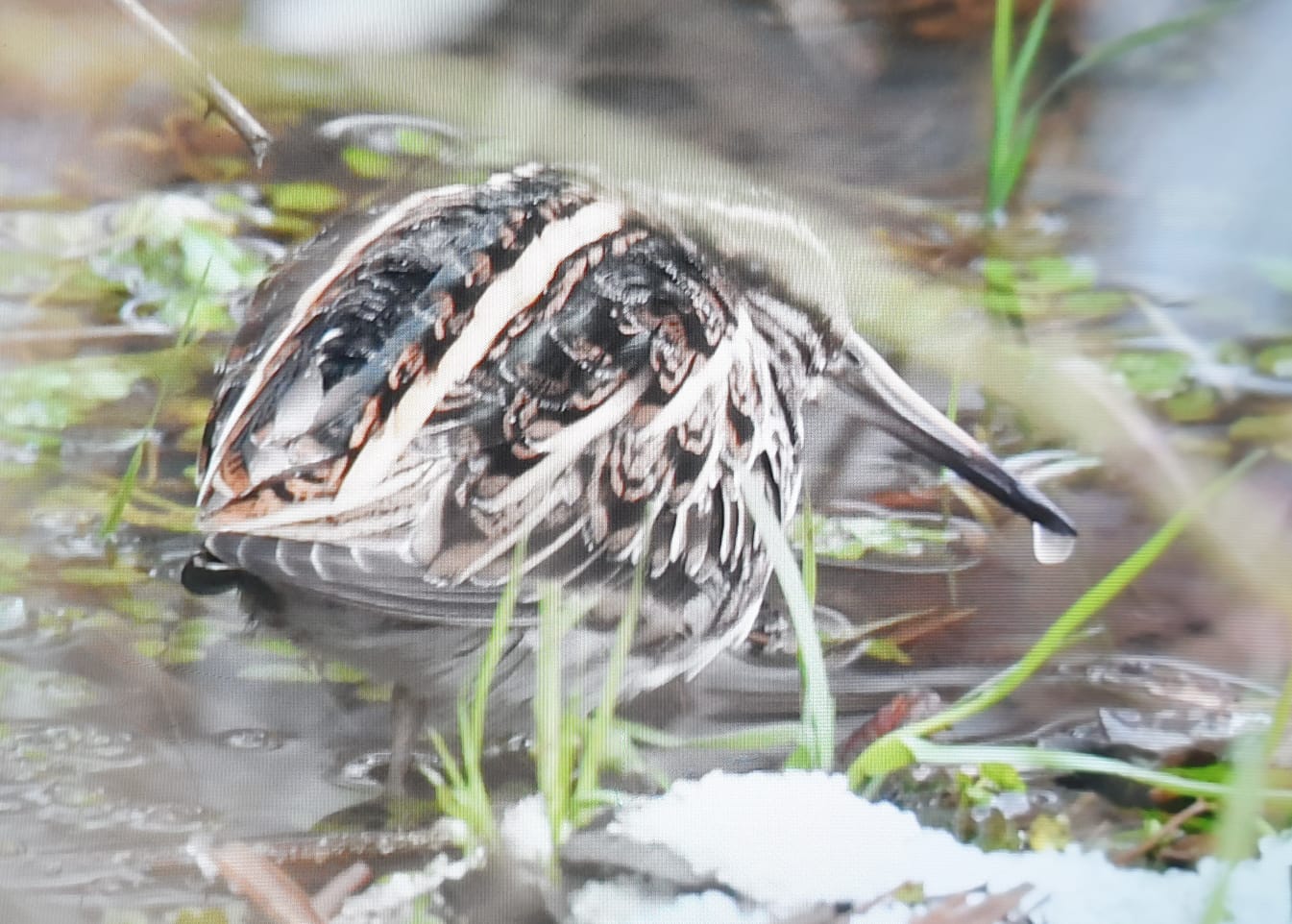
Patrick saw the first Grey Wagtail of the year from the concrete track on the 7th and Maynard had one at Duffles Pond the next day. Pat also found a bobbing Jack Snipe on the 7th, out in the open among the Snipe in the horse paddocks (Mick got this excellent photo of it a few days later). 

Sean flushed a Green Sandpiper from a ditch off the concrete track on the 9th, and a male Bullfinch took up residence for several days in and around Duffle's Pond. 


Walking a tightrope in this cold weather...

The cold weather also drew plenty of Golden Plover and Skylarks into the farmland alongside the Lapwing, Snipe and Woodcock, and Redwings and Fieldfares were increasingly visible as they looked for food in the snow. 


A male Blackcap put in several appearances at the Low Road feeders, and Great Spotted Woodpeckers started drumming in the woodland on the Burnley Hall estate. 


The cold continued on the 11th and 12th, and immature Kittiwakes were seen flying over the beach and three Grey Plovers on it. The first Lesser Black-backed Gulls began to reappear. around this time too. Where do they get to in January?


Barry had a Little Gull on the 14th. (Colin saw a small flock later in the month too.)

On the 15th Pat had a Great Crested Grebe on the sea and Maynard saw three Goosander flying over Duffle's Pond, presumably coming from the Broads. Pat had another Goosander fly past at sea later in the month. 

Sean saw another first winter Caspian Gull sitting on the sea offshore from the diamond sign on the 16th.


On the 18th Barry found a herd of 38 Bewick Swans on farmland north of the concrete track, which stayed for most of the day. 


Also on the 18th Maynard became this year's winner of the fabled Creme Egg Trophy, awarded annually to the first of us to reach 100 species (not including Barry, who would never stoop to such vulgarity).  

On the 20th Mick refound a Tundra Bean Goose in with the Pinks on the beet field from the Holmes Road, and Sean saw two later that day when the flock had flown over to the fields inland of Bramble Gap. Sean also found and photographed one back in the beet field the next day.  


In the last week of the month Pat reported exciting news that Tawny Owls were actively investigating his nest box, and on 21st we received news from Tim A up the coast (thanks Tim!) that a pair of Ravens were heading our way. Since most of us were out birding already quite a few of us connected with them as they came down through the north dunes and landed briefly before deciding to fly back up towards Horsey. 


The first queen bumble bee was out on the 21st, and Mick had a flypast Long-tailed Duck. 

On the 22nd Pete found two Black-tailed Godwits on a flooded field to the north of the concrete track.  This is a very rare species here which would be a life patch tick for some of us, and so caused an immediate scramble, but despite cycling as fast as our little legs would go, we arrived too late.  Later that day Colin saw a small flock of 6 or 7 Little Gulls flying south close in shore. 

On the 23rd the first Great White Egret was seen flying over farmland in the north of the patch, and it was seen a few more times over the next couple of days, with Pat seeing two together on the 27th.


On the 24th there was a big movement of Red-throated Divers and Gannets, and on the 25th Colin saw the first Red Kite of the year drift south through the north dunes and high over the village.

The male Hen Harrier, here last month, also put in a couple of appearances on the 25th, being seen by Mick near the cow barn and later by Pat in fields south of the village.  Mick also had a White-fronted Goose in with the pinks, and Tim saw a 2nd winter Caspian Gull on the beach at Bramble Gap.  

On the 26th Sean found his third Caspian Gull of the month, another first winter on the beach at Bramble Gap, a really nice long-legged, long-billed individual, and later that day saw the year's first Pintails, a pair which landed on the sea late in the afternoon in the moonlight of the snow moon - a beautiful sight. 


On the 27th Tim had a flyover Lapland Bunting and the Peregrine was seen whizzing around, and sitting on, the church tower again 🤞🤞🤞.

So that was February 2021. So far this year, we have collectively seen 126 species on the patch.  If you want to know who has seen what, you can check out the Year Lists section on the right if you are viewing on a computer or below the January roundup if not.

To finish, here are some of Pete's bird notes from Februarys gone by.  Happy patch birding everyone!